
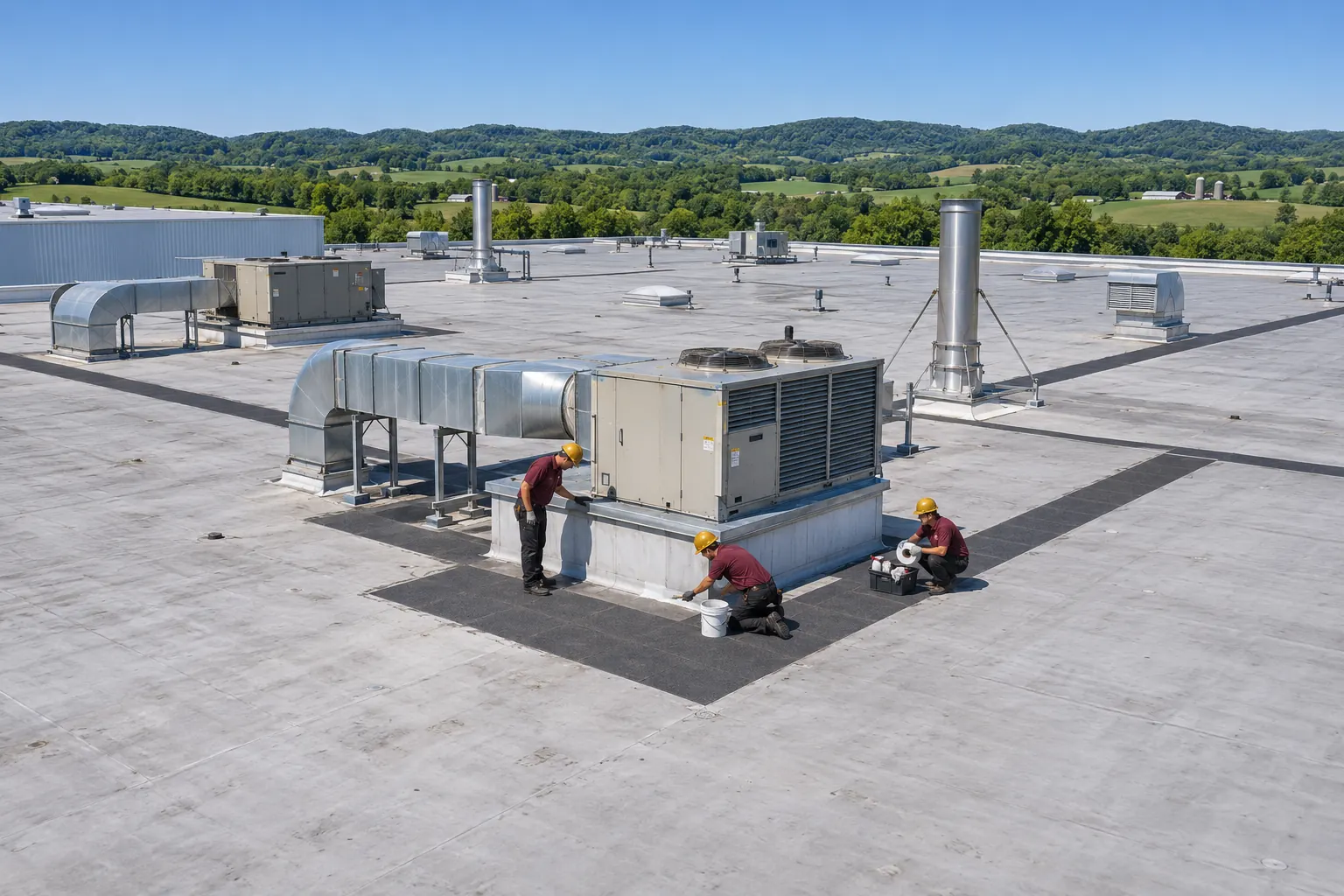
Industrial building roof with rooftop equipment seen from above
Industrial Roof Repair · Richmond, KY

Richmond Industrial Roof Repair Contractor

Repair Work for Plants, Warehouses, and Busy Production Roofs

As a Richmond industrial roof repair contractor, we repair membrane softened by residue, split expansion joints, and leaking curbs on plant and warehouse roofs.

  • Membrane Roofs
  • Metal Panel Roofs
  • Built-Up And Mod Bit
  • Plant And Shop Roofs
  • Exhaust AreasResidue cut out and patched
  • Expansion JointsBellows and covers replaced
  • EquipmentLarge curbs and old openings
  • OperationsWork staged around production

Is This Plant Roof Ready for Repairs?

A Richmond industrial roof repair contractor looks at the busy zones first: fans, joints, curbs, and service routes. These signs show whether repair covers it.

Repair Fits When

  • Damage clusters around fans, vents, or one curb
  • Expansion joint covers have lifted in spots
  • Abandoned curbs and pipe supports need closing
  • Punctures follow the paths service crews walk
  • Moisture readings stay dry away from the busy zones

Plan For More When

  • Residue has softened membrane across the roof
  • Wet board spreads well past the equipment areas
  • The deck has rusted under old unit openings
  • Every section of joint cover has failed
  • Large areas of sheet have shrunk off the walls

Industrial Roof Repair Trouble Spots on Richmond Plants

Plant roofs carry traffic, heat, and residue an office roof never sees. The featured condition drives most industrial calls.

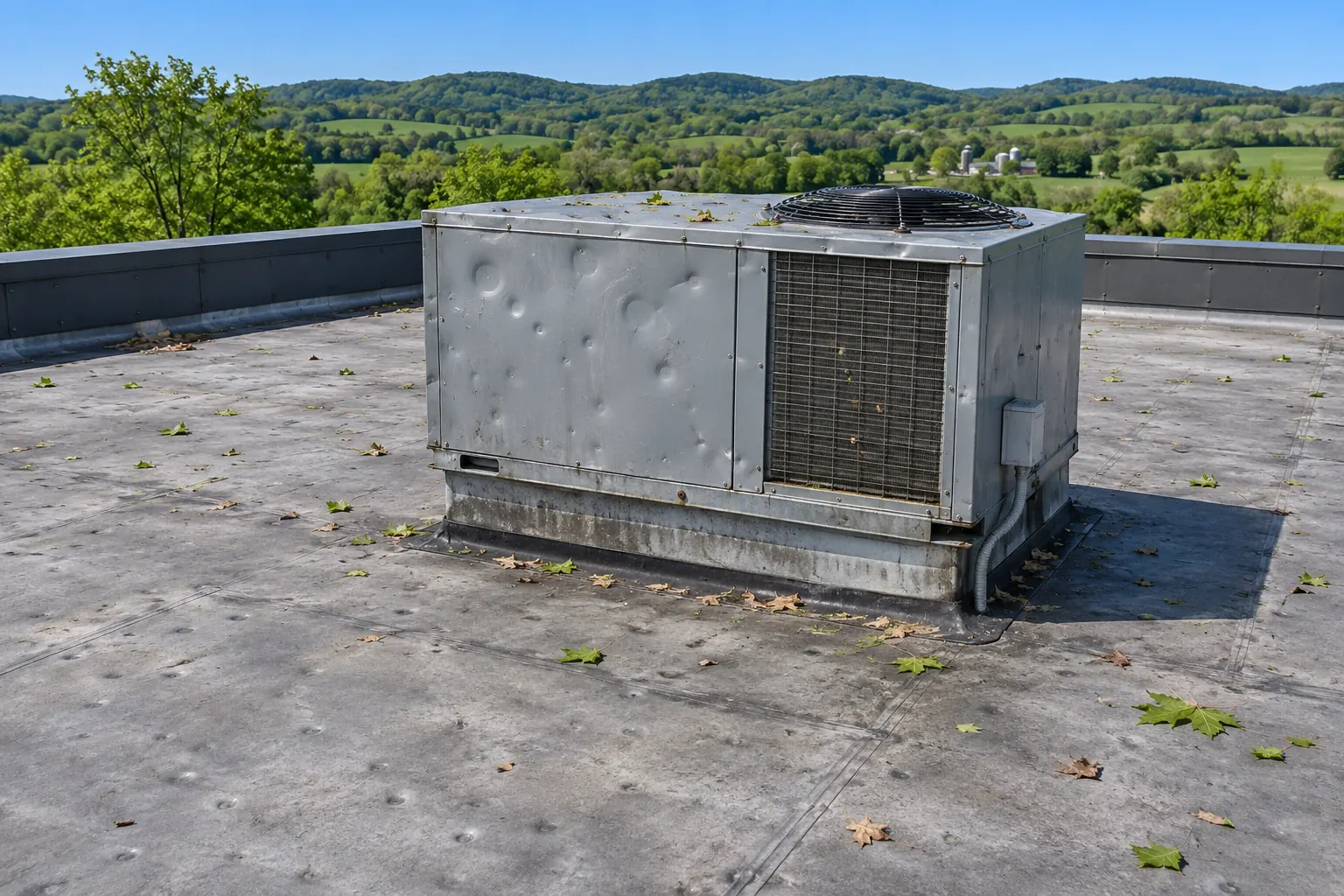
Damaged roof surface near rooftop equipment

Membrane Softened Around Exhaust

Kitchen grease and some process oils swell EPDM and break down other membranes over time. The sheet around the fan turns soft and gummy, then splits, and water follows the fan curb straight down into the plant.

Usually MeansDegrease, cut out soft sheet, and patch in a resistant membrane.

  • Split Expansion Joints

    A split bellows or a wind-lifted cover lets water straight into the building between sections.

  • Leaking Large Curbs

    Curbs under make-up air units and dust collectors open at corners and the upper edge.

  • Abandoned Openings

    Old curbs with plywood covers and empty pitch pans stay on the roof after equipment changes.

  • Service Route Punctures

    Dropped screws, filters, and panels pierce membrane between the hatch and each unit.

Commercial Roof Repair Options for Richmond

Most industrial roof leaks fall into one of these four repairs.

Roof Repair Around Exhaust Fans

Grease and residue are cleaned off, damaged sheet is cut back to firm membrane, and the patch goes in a compatible material, often PVC near grease, with a sacrificial pad or containment box under the fan.

Industrial Expansion Joint Repair

Failed bellows and lifted covers are replaced and both sides reflashed with flexible material that stretches as the building sections move apart.

Closing Abandoned Rooftop Curbs

Unused curbs are removed, the deck opening is infilled, and the roof is patched over it. Curbs kept for later get a sealed metal cap, and empty pitch pans are sealed or pulled.

Plant Roof Repair During Production

Crews work from outside and open only small areas at a time. Hot work, intake shutoffs, lockout, and access rules are settled with plant safety staff before work starts.

Benefits of Repairing Your Roof

Repairs on a plant roof protect the product, the equipment, and the people working underneath.

Owner

  • Fixing the fan curb keeps residue damage from spreading across the field.
  • Closing old curbs removes leak points left by past equipment changes.
  • Repair records by roof area help the capital plan for the building.

Facility Manager

  • Work is scheduled around production, with intake shutoffs planned ahead.
  • Walkway pads and an access log cut down repeat punctures.
  • Flexible joint repairs keep pace with movement between sections.

Tenants And Staff

  • Dry floors on the line and in the electrical rooms below.
  • Extra interior protection over clean rooms and food lines during repairs.
  • Fewer buckets and wet pallets in the aisles after storms.
Roofer walking a commercial roof to check seams and drains

Equipment Change Coming Up on the Roof?

New units leave old curbs and holes behind. Plan the closures and new curb flashing with the equipment work, so nothing is left open.

Planning Work With a Richmond Industrial Roof Repair Contractor

Plant repairs add a coordination stage, because production keeps running while the roof is open.

Stage 1

Inspect Your Roof

The walk covers fans, vents, expansion joints, large curbs, abandoned openings, and service routes, with moisture readings around each busy zone.

Stage 2

Coordinate With Plant Safety

Hot work permits, air intake shutoffs for primers and adhesives, equipment lockout, roof access routes, sign-in, and fall protection rules are agreed before work begins.

Stage 3

Repair In Small Sections

Only small areas are opened at a time. Residue damage is cut out, joints and curbs are reflashed, and old openings are closed before the day ends.

Stage 4

Protect And Record

Walkway pads go along service routes, containment goes under grease fans, and photos of each repair go to the facility manager with notes.

Other Repairs Plant Roofs Need

Plant buildings usually combine roof types and leak sources.

Membrane Sections

Office and lab wings on single-ply roofs get flat roof repair at seams, boots, and drains.

Hidden Water Paths

Drips over the line that match no curb call for roof leak repair tracing first.

Richmond Industrial Roof Repair Questions

Answers on residue, production, joints, curbs, and foot traffic.

  1. 01

    How are roofs around exhaust fans and process vents repaired?

    Clean off the grease or residue, remove membrane it has softened, and patch with a material that resists it, often PVC near grease. A sacrificial pad or containment box under the fan and a check of the fan curb flashing and hinge kit round out the repair. Clean filters keep residue off the sheet.

  2. 02

    Can roof repairs happen on a plant roof while production runs?

    In nearly every case, yes. Crews work from outside and open small areas at a time. Settle hot work permits, intake shutoffs, lockout of rooftop equipment, and access and fall protection rules with plant safety first. Work over clean rooms, food lines, and electrical rooms gets extra interior protection.

  3. 03

    How are expansion joints and large curbs repaired on industrial roofs?

    Expansion joints get a new bellows or cover with both sides reflashed. Large curbs under make-up air units and dust collectors get new flashing run up the curb and sealed under the counterflashing. Both details move more than the roof around them, so repairs use flexible flashing.

  4. 04

    What repairs do rooftop equipment changes leave behind?

    Abandoned curbs, unused pipe supports, and open holes where old units sat. Each needs a proper closure: remove the curb and infill the deck, cap a curb kept for later with sealed metal, pull unused supports and patch under them, and seal or remove empty pitch pans. New curbs also need crickets uphill.

  5. 05

    How can foot traffic damage on an industrial roof be reduced?

    Put walkway pads from the hatches to each unit, keep a roof access log so damage ties to a visit, and ask contractors to carry off screws, filters, and cut-offs. Schedule a roof walk after major equipment work. A puncture caught early is a quick patch instead of wet insulation.

Bring In a Richmond Industrial Roof Repair Contractor

Send the plant address and the areas giving trouble, and we will plan the roof walk with your safety staff.

Get A Free EstimateCall Us